
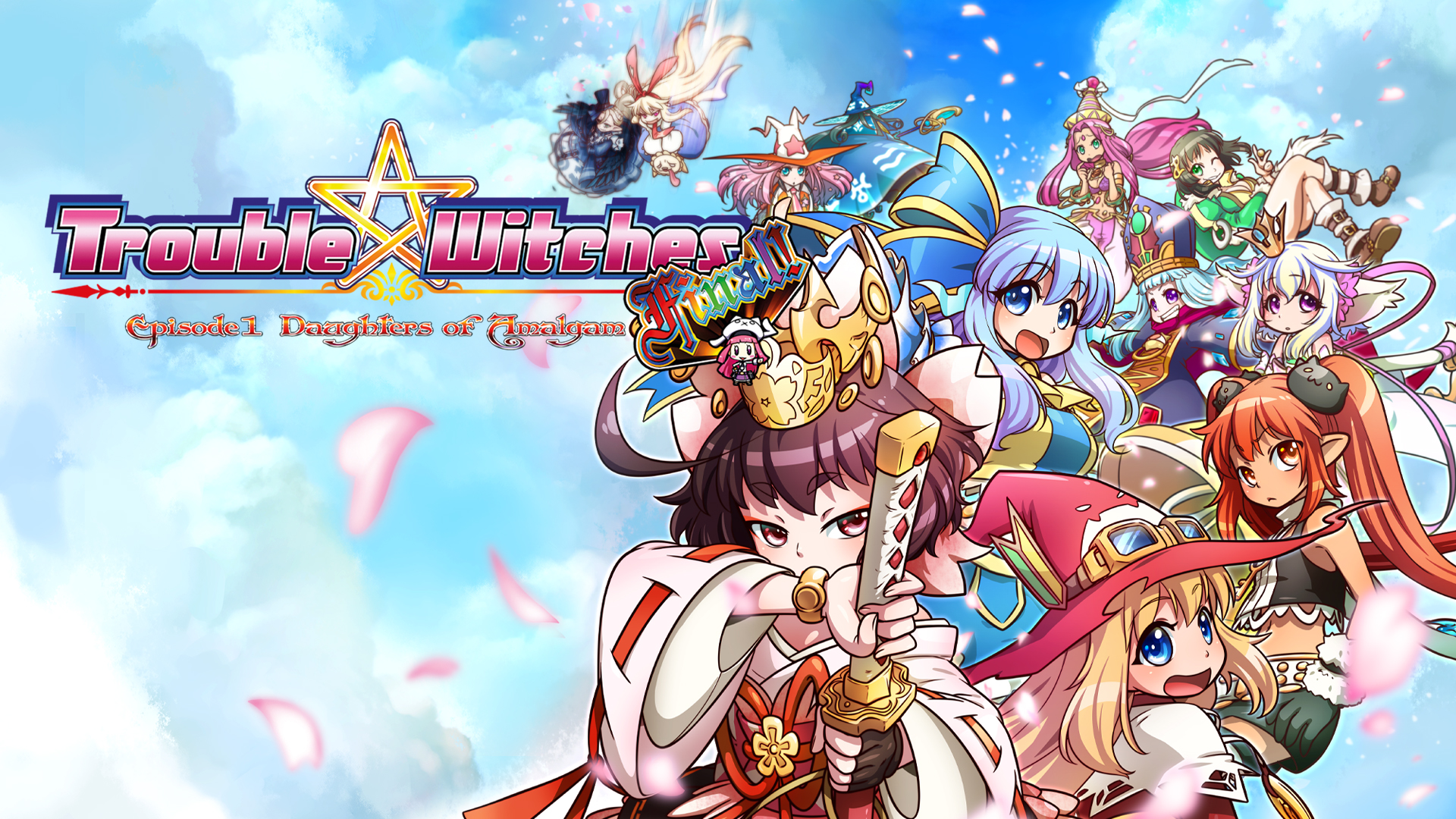
At the rate we’re going, it’s not going to be long until every shoot-’em-up ever made is available on Nintendo Switch. The latest addition to this extensive library is Trouble Witches, a new, enhanced release of a doujin shmup that’s been kicking around since 2007. With its cute character designs and clever mechanics, it proved popular enough to get several re-releases in the years since, including an arcade release through Taito. Now it comes to Switch (and PlayStation 4) in the form of the feature-rich Trouble Witches Final: Episode 1 – Daughters of Amalgam. (Yes, it’s a mouthful. No, there is no Episode 2.)
What looks at first glance like a fairly typical side-scrolling shooter soon makes apparent that it’s anything but. Trouble Witches is defined by its Magic Circle mechanic, with which players can’t drop a magic circle that slows most enemy bullets to a crawl. Kill a foe while its shots are trapped in the magic circle, and they’ll turn into coins; let an enemy escape, and any trapped bullets suddenly change trajectory to aim directly at you. This makes it both a safety net and a central element of the game’s scoring system, but get careless with it and you’ll quickly find yourself on the back foot.
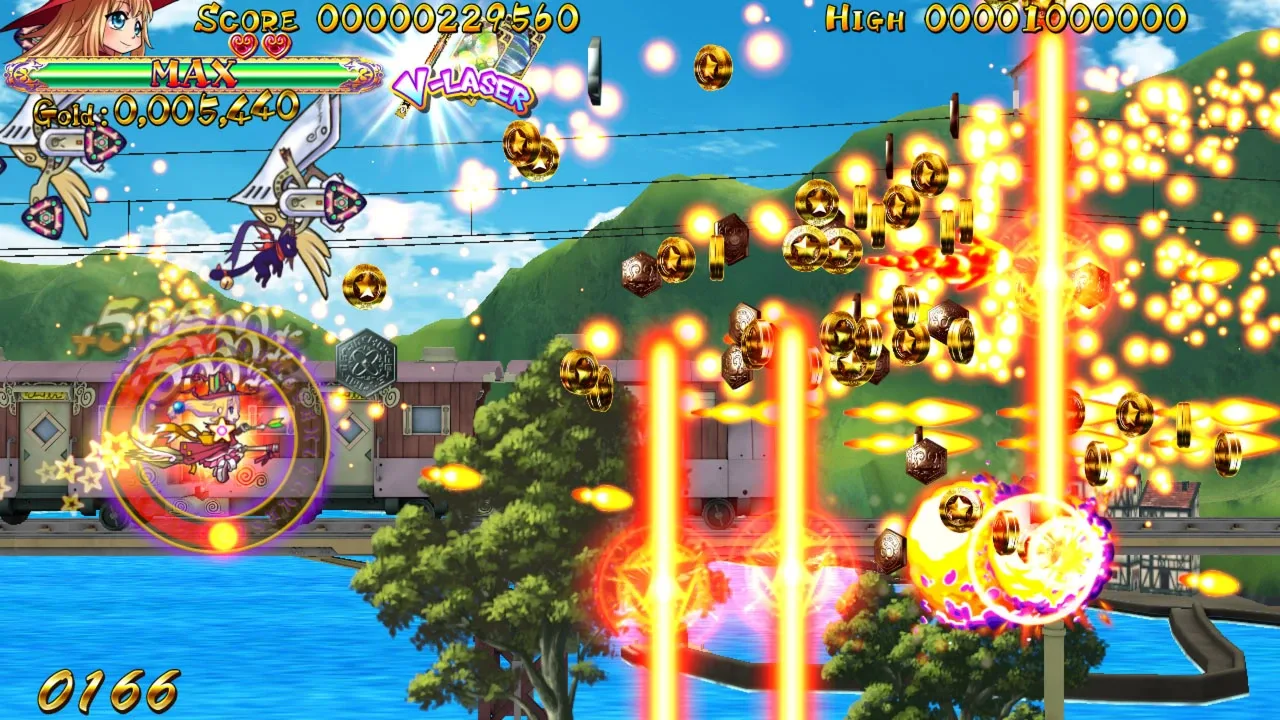
It’s exactly the kind of system that makes a great shoot-’em-up, in my eyes: conceptually simple and easy to make use of right out the gate, but with a lot of hidden depth if you really want to dig into its nuances and amplify your scores. At the simplest level, you can basically just keep a magic shield out as much as your MP gauge allows, treating it as a sort of weaker but longer-lasting, regenerating bomb—that’s not exactly efficient, but it works well enough. Then, as you get a better feel for the flow of the game, the enemy shot patterns, and so on, you can start being more strategic with how you deploy it to maximise score. (Though stylistically and mechanically very different, Trouble Witches reminds me a bit of Schildmaid MX in terms of its skill/mastery curve.)
The other side of this system is the in-game shop that appears a couple of times per level (a fun little nod to Fantasy Zone). The coins collected from the magic circle can be spent here on MP upgrades, extra lives, and magic cards. The latter are a bit like this game’s version of bombs, in that they make you momentarily invincible and destroy nearby enemy bullets when activated, but they have a more important job: they change your shot type (exact effects vary depending on the card in question), power you up for a little bit, and make enemies drop score-multiplying star coins.
You can only carry three magic cards at once, but the frequency of shop appearances and the lucrative income you can get from smart magic circle use mean you’ll have plenty of opportunities to buy more … in other words, magic cards are there to be used liberally, not hoarded and saved for an emergency. Magic circle to get money, spend money to get magic cards, and then use those magic cards to jack up your firepower and score multiplier—it’s a fun, exciting loop that adds a lot to Trouble Witches beyond simply dodging bullets (though there’s plenty of that, too).
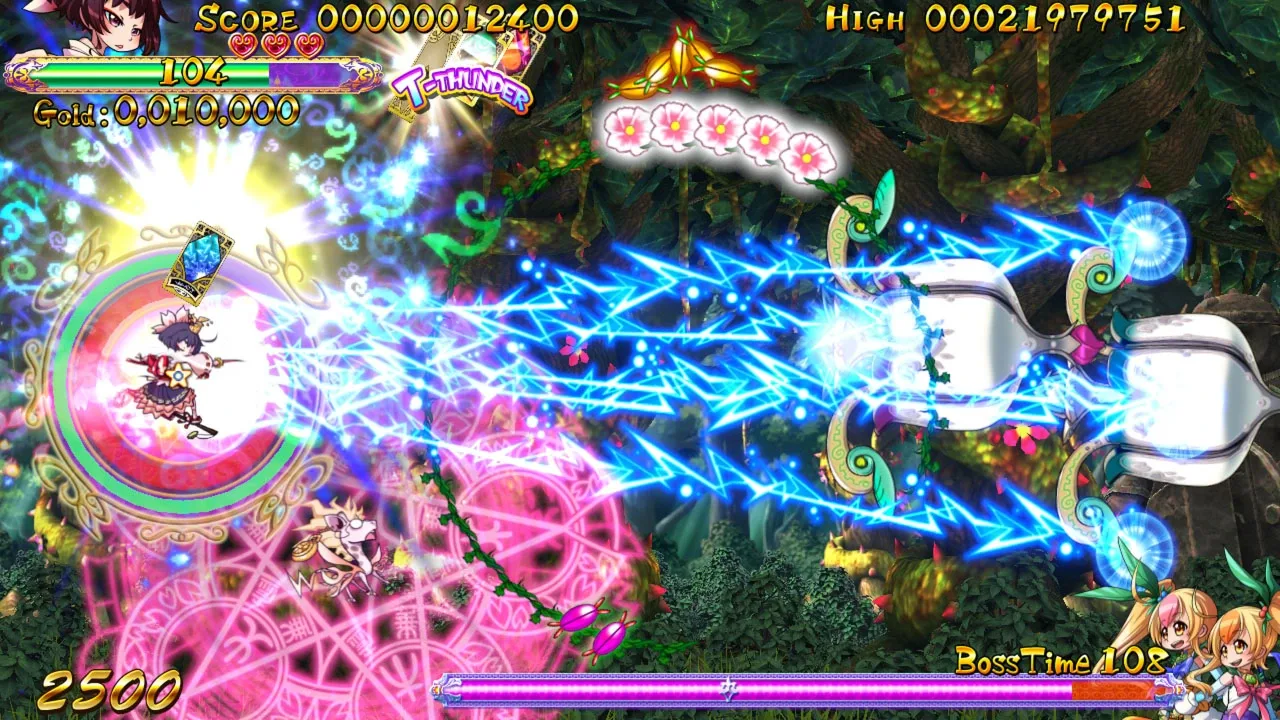
As the culmination of lots of different releases across various platforms throughout the years, Trouble Witches Final comes with plenty to chew on. There’s a standard arcade mode, the more challenging “Valpurgis Night” mode, a port of the 2009 arcade release, and score attack, boss rush, and endless survival challenge modes. Across all of these modes, there are 12 different characters to choose from, all wildly different in terms of both visual design and their weapons of choice—and by extension, with very different styles of play and degrees of complexity. There’s also an unlockable, more powerful EX version of each witch, and Cotton (from Success’ Cotton series, a major inspiration for Trouble Witches) as a DLC guest character. With all that, there’s plenty of variety to be found.
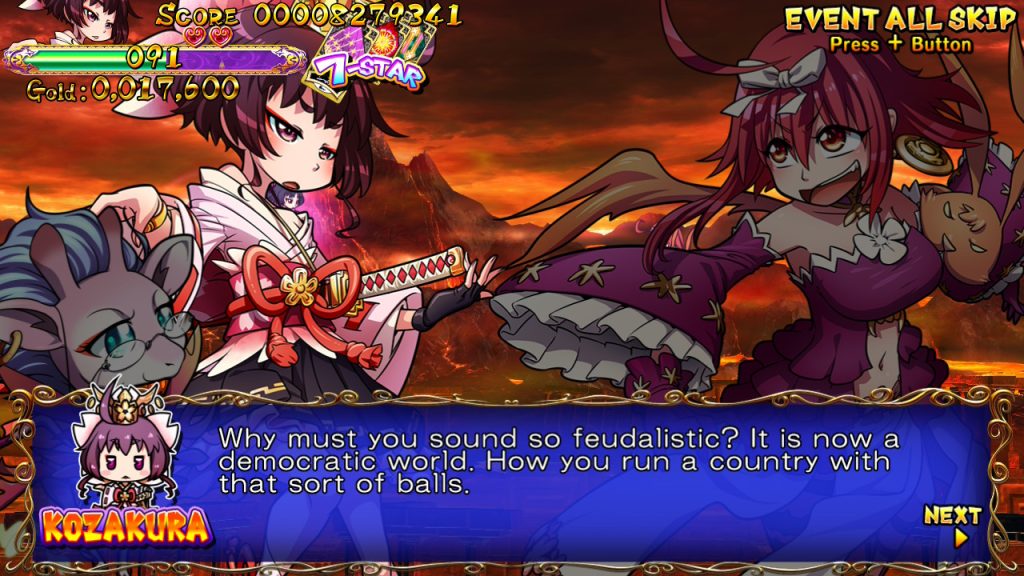
There is also a story mode, which is essentially arcade mode with added dialogue and cutscenes as part of a unique story for each character. Unfortunately, the English translation is so bad that this mode may as well not exist. And when I say “bad”, I don’t mean the awkward, unintentionally funny translations that used to be common, and were endearing in their own way; I’m talking about machine-translated gibberish. The English script is so disjointed that the stories make barely any sense at the best of times, and are completely incoherent at the worst. Robotic dialogue with no consistent voice robs characters of any personality, and the script is riddled with spelling and grammatical errors.
“To become global, you cannot avoid the conflic between denim jeens.”
“Could that be … self hommage to ringidy-ding model sheets?”
“Off goes with my head if I let you go alone.”
Sure, this is an arcade action game where narrative is far from the main attraction, so the translation issues aren’t the end of the world, but it does feel like a big part of Trouble Witches’ charm and identity is lost as a result. The character designs, art style, and music all do a fantastic job of building up the cute, playful atmosphere that defined the games Trouble Witches pays homage to. The Japanese versions adds to that with a goofy, irreverent sense of humour in the story mode’s cutscenes, but not a drop of that comedy and personality comes through in the English script, and the game is worse for it.
Still, the core action is good enough to make Trouble Witches Final: Episode 1 – Daughters of Amalgam worth checking out. It doesn’t have quite the same cute-’em-up charm and atmosphere as it could have with a better localisation, but the nifty magic circle mechanic and the dynamic game loop it fosters, the extensive and varied roster, and the wealth of different game modes make this an enjoyable game that any shmup fan will want in their library. Now, I wonder if we’ll ever see an Episode 2?
Test version: Nintendo Switch (played on Nintendo Switch 2)
Review code provided by the publisher.
A fantastic, inventive indie shoot-'em-up finally makes its way to modern consoles, although a woeful translation undermines some of the original game's appeal.
