
Controversial opinion time: I’ve never liked God of War. (No, not even the Norse reboot that I’m apparently the only person in the world to dislike.) But turn something into a metroidvania—especially of the 2D pixel art variety—and it immediately gets my attention. So when Sony shadow dropped God War: Sons of Sparta during last month’s State of Play, I was suddenly in the very unfamiliar position of being curious about Kratos’ latest (or earliest, being a prequel) adventure.
That curiosity wasn’t misplaced.
God of War: Sons of Sparta doesn’t seek to reinvent the well-traversed formula for exploration platformers, but that’s not inherently a bad thing. What it lacks in innovation it makes up for in fluency with the genre. Upgrades come regularly but not excessively so, and nothing ever becomes irrelevant. Said upgrades come in a few different forms: tools bestowed by the gods, enhancements to said tools, and new powers awoken in a carved head you always carry around. The end results are largely the same—new ways of interacting with and navigating around the environment—but those different sources add a touch of thematic variety and a delineation between essential upgrades and optional but useful ones.
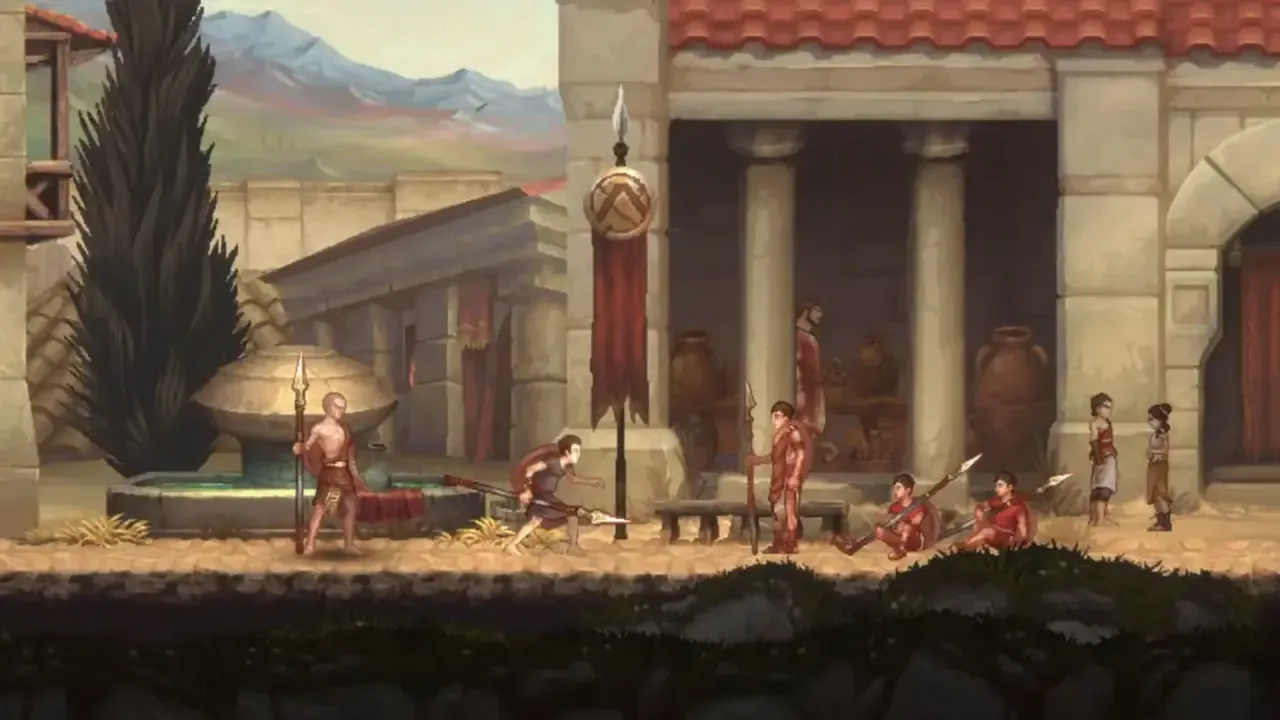
The map is huge, with some 20 different areas, and—more importantly—elaborately, smartly designed. The many different areas are expertly woven together in classic metroidvania fashion: an initially linear path dotted with the telltale signs of places you’ll be able to explore later, gradually looping back on itself and connecting different points as you upgrade your toolkit and unlock doors. It makes exploration a delight, not just for the promise of treasure when you go off the beaten path, but in the tease of later upgrades and the fun of seeing the puzzle come together. Again, none of this is new—Metroid turns 40 this year—but the team behind Sons of Sparta understands the nuances of this design approach better than many.
Combat is an equally important component of Sons of Sparta—as you’d expect, being a God of War game. Unfortunately, despite bold ambitions, it doesn’t hit the same highs as the exploration side of the game. The basic idea is simple, familiar melee combat—weak attack, strong attack, block, dodge—with an added wrinkle of resource management. Special attacks do less damage than regular attacks and drain a rechargeable power gauge, but they also spawn all-important health orbs and stun enemies more quickly, leaving them open to a powerful instant-kill attack. Regular attacks, by contrast, don’t have the health gain or stun damage of special attacks, but they do more direct damage and spawn orbs that recover your power gauge for special attacks.
The idea, then, is to alternate between the two attack types, dishing out special attacks as much as your bar allows to drive up an enemy’s stun bar and/or recover some lost health, before switching to regular attacks to regenerate power, and then back to the special attacks. In practice, things rarely work out that way. Even with the reduced damage, special attacks still hit hard enough to kill most enemies outright before stunning them, and the ones you can stun typically aren’t worth the extra effort, compared to just spamming your regular attacks. As you get stronger and your raw damage output increases, special attacks only become less effective.
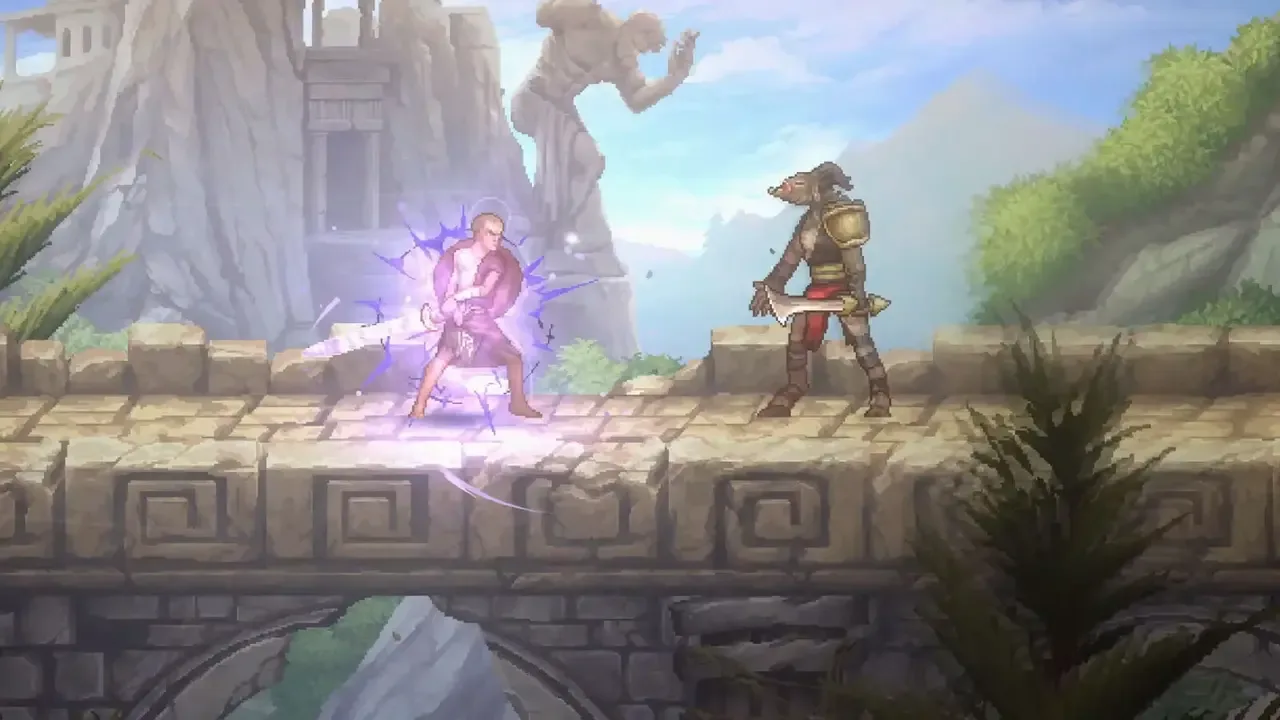
The worst part is the fact that bosses just exist outside this regular/special attack dichotomy entirely. They can’t be stunned, and both attack types do the same damage, so the system becomes solely about managing health. There’s a missed opportunity to do something really interesting there, and make what should be a core part of Sons of Sparta’s combat design a centrepiece of boss fights, instead of just pushing it to the side.
What’s left is fairly rudimentary 2D melee combat. It’s not bad, and the variety of different skills available through upgrades and gear give you scope to personalise your fighting style to some extent, but it winds up feeling like combat for the sake of combat rather than one of the main attractions. (And too often, said combat becomes a hindrance to exploration, like when foes get stuck on the edge because they’re trying to get to you but can’t drop down—leaving you unable to get past or engage properly.) Boss fights amp things up a little bit with some interesting attack patterns, but not enough to really stand out. It’s a shame, because there are good ideas here, but they never really get the chance to shine.
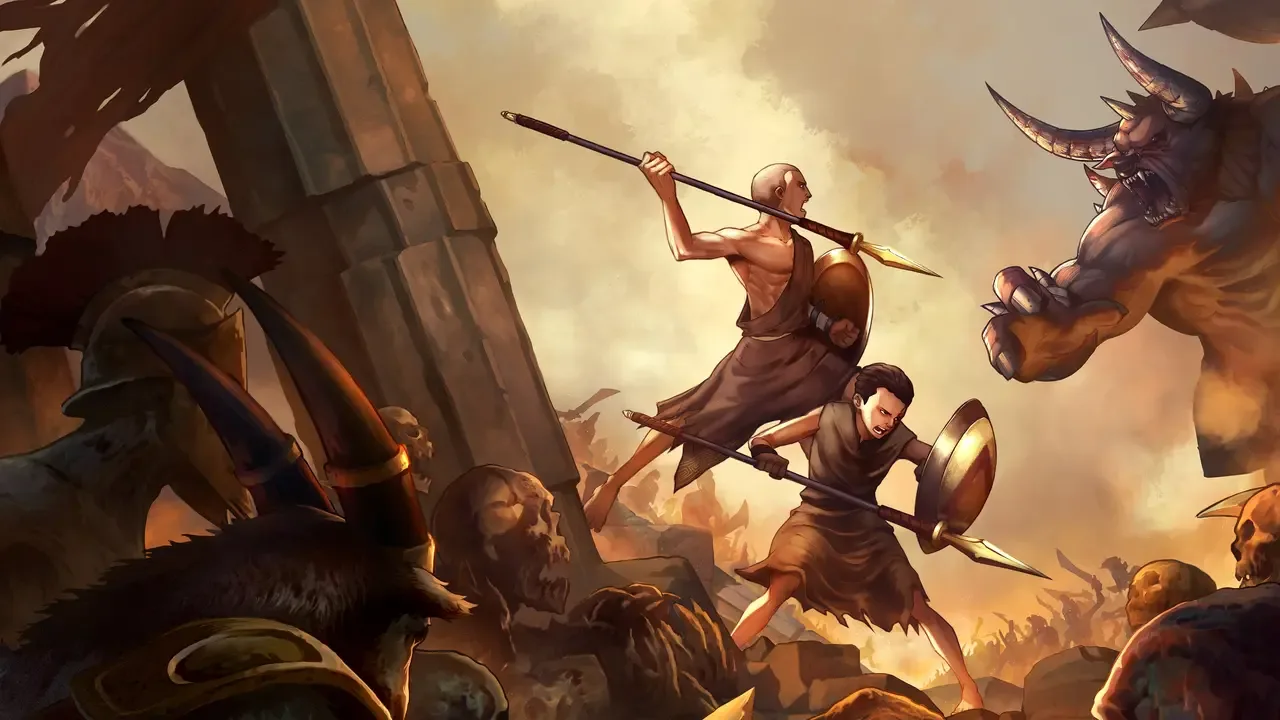
The thing tying this all together is a more personal tale than you might expect from a God of War game. It’s a prequel about Kratos days as a Spartan trainee, before he started killing gods. When Kratos and his brother Deimos’ training outings (exploring Sparta’s surrounds and keeping peace, mainly) turn into a quest to find another trainee who’s gone missing, they find themselves on an adventure across Laconia, crossing swords with an assortment of familiar mythical beasts. The setup is mainly a catalyst for adventure, but Sons of Sparta is really a story about brotherhood: about the trials that Kratos’ and Deimos’ brotherly bond is put through and their contrasting views of what “duty” really means.
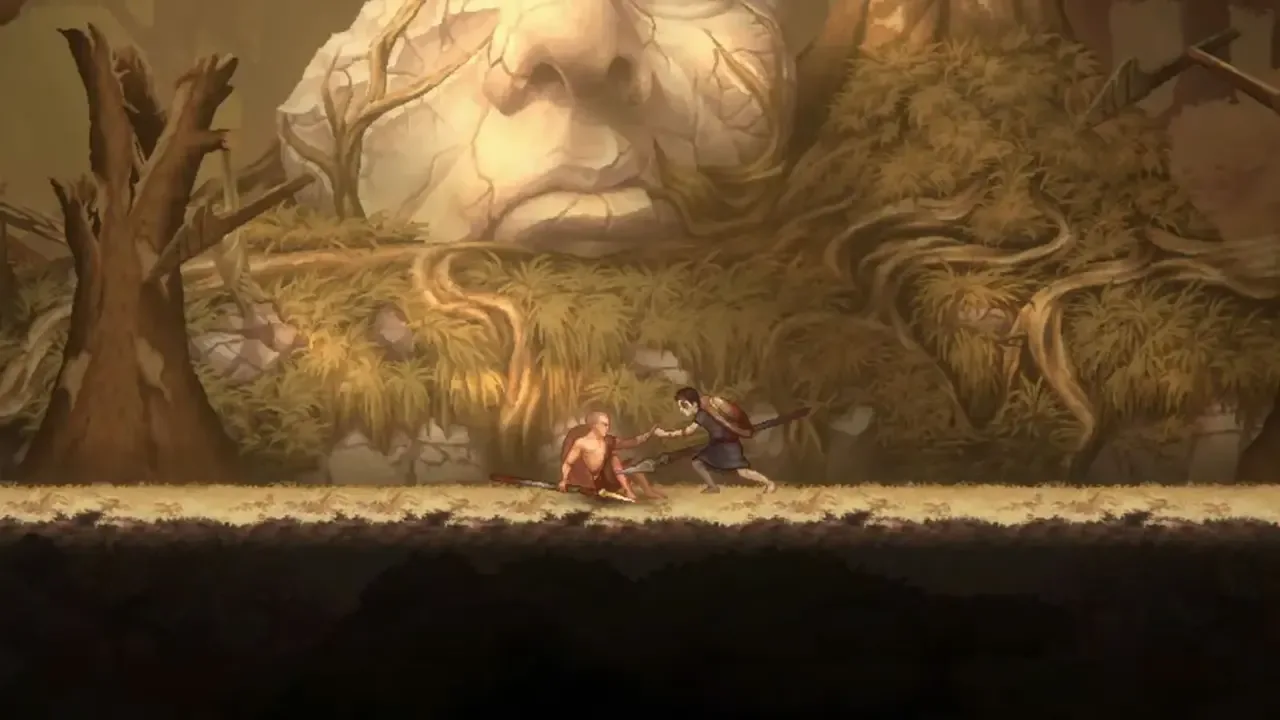
As a plot, it’s nothing groundbreaking, but nor is it meant to be the sort of world-shattering adventure that Kratos would get plenty of in his older days. Rather, it’s an intentionally small, intimate insight into Kratos’ youth, and sharp writing and excellent voice performances give that weight.
All up, Sons of Sparta is a welcome change of pace for God of War, even if it doesn’t always hit the right notes. It doesn’t push boundaries and the unrealised potential in its combat design is disappointing, but a well-crafted map and smooth cycle of upgrades make it one of the more enjoyable metroidvanias this side of The Lost Crown. Even if God of War isn’t your usual jam, this one might be worth a look.
God of War takes a metroidvania turn in Sons of Sparta, and despite some missed opportunities, it's a worthy adventure.
