
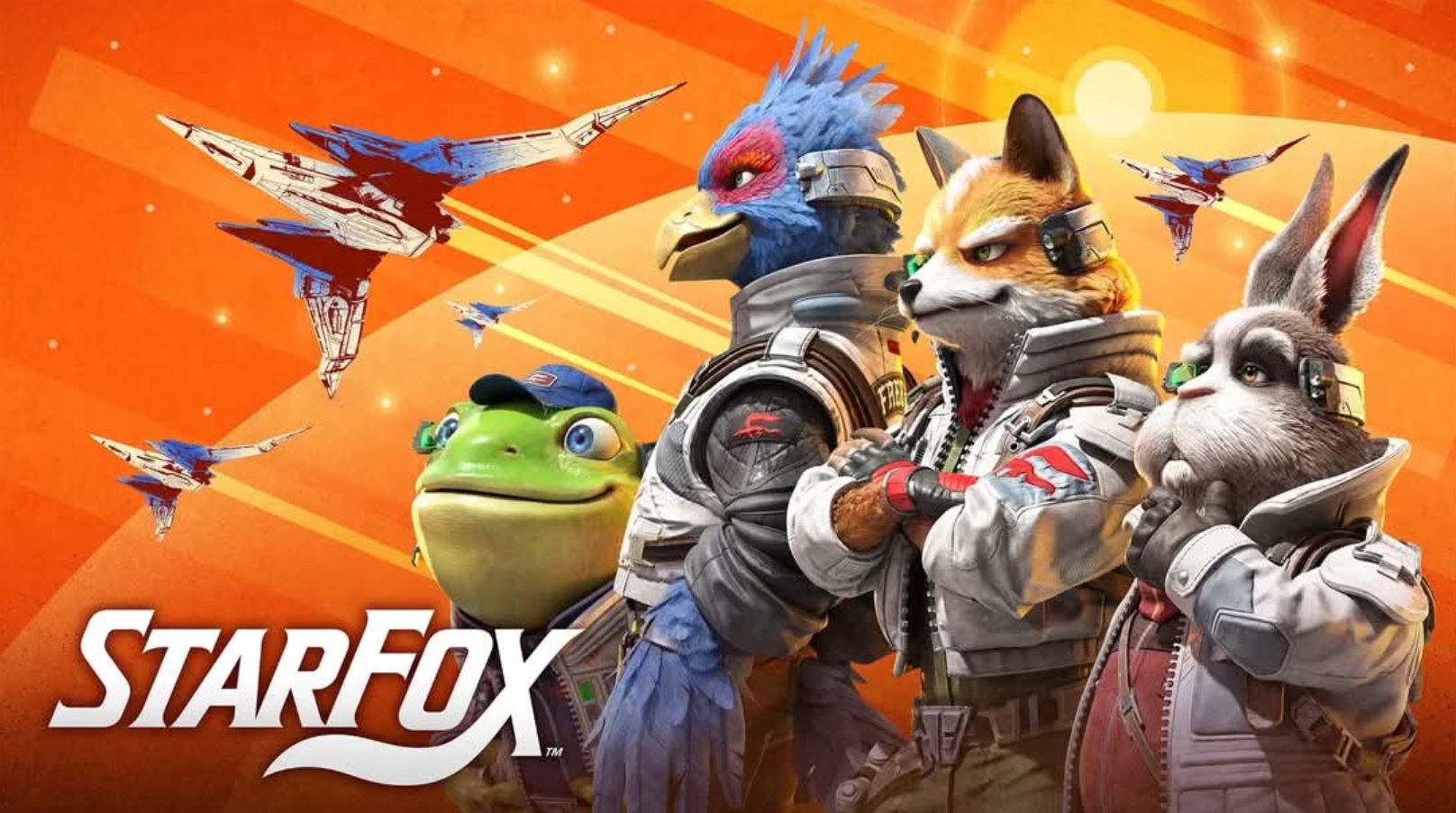
At first glance, Star Fox has the gloss of a current generation AAA blockbuster. With rich lighting, detailed assets, and an orchestral score accompanying tightly directed cutscenes that would feel at home in any PlayStation Studios title. But once you get a hold of the Arwing, the game takes a turn for the N64, and you get to relive the days when video games were leaner and focused on mechanics, fun factor, and some occasional goofiness to remind you that a talking fox is flying a spacecraft on the screen right now.
In bringing Star Fox to a new generation, Nintendo and developer Velan Studios had the option of reimagining what the franchise could look like from a gameplay perspective, perhaps redesign the levels to be more open and give players opportunities to explore, or turn the spectacle up to eleven by adding more dramatic set pieces. But they have not done this, and I am thankful for it.
Dogfights in the Safari
For better and rarely worse, Star Fox gives you exactly what you expect. It has the smooth as butter controls synonymous with Nintendo’s first party titles, while running at 60FPS with minimal input lag. The Arwing feels incredible to control, whether through the thumb sticks or the excellent Joy-Con 2 mouse tracking. Even though the movement and tilting animations take clear inspiration from its N64 predecessor, the responsiveness and agility of the spacecraft sells the fantasy of piloting a cutting-edge fighter jet through perilous terrain while being hunted by loathsome enemies. If you have never played Star Fox and that description didn’t paint enough of a picture already, think back to the rush of the dogfights in Top Gun: Maverick, and specifically the scenes where the cameras were mounted to the jets; that’s how it feels to fly the Arwing in this game.
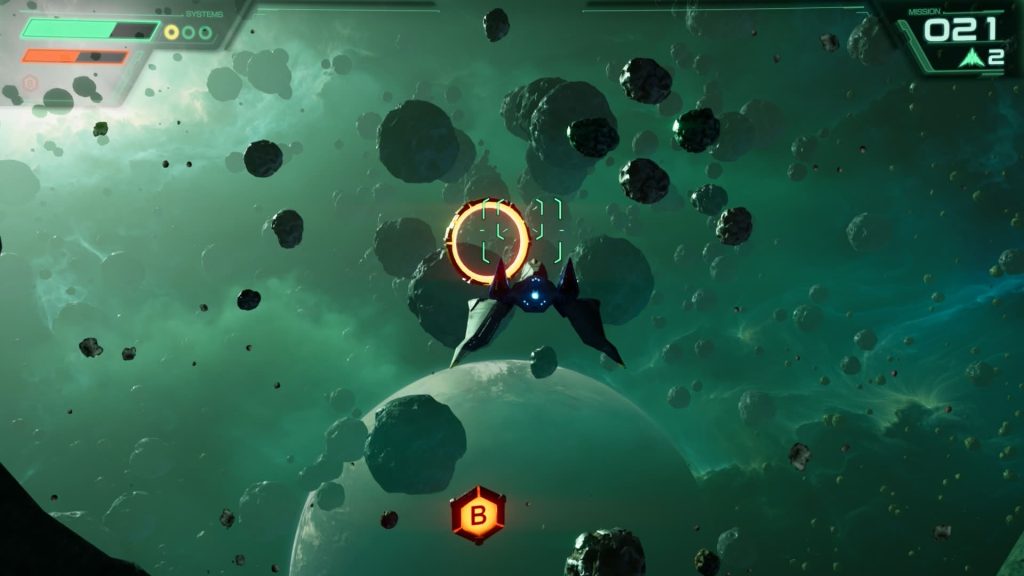
Star Fox features the best enemy AI I have seen in years, especially in a particular team battle in the level Venom II, which was brutal. All the tricks available to the player, from the somersaults to the damage avoiding barrel rolls, were used relentlessly by the AI, who mercilessly hunted down my teammates and forced me to use several continues. It is genuinely one of the most difficult sections I have played in a video game this decade. This made the mission super memorable, and it did make sense given the context of the encounter that the enemy team would be fighting tooth and nail to keep you from advancing to what lay ahead.
All the levels are superbly designed, and do an excellent job of incorporating branching paths. Often, I find myself indifferent to branching paths in video games, because when done wrong they feel like a temporary diversion en-route, just to end up in the same place eventually. If you think about a traditional campaign, having multiple branching paths and endings to every level is not the most feasible thing to incorporate, but I recently realised my indifference to them, especially when routes converge at the end, is more a by-product of the usual branching paths not offering a different enough experience depending on which one you choose. Allow me to demonstrate, with an example from Star Fox.
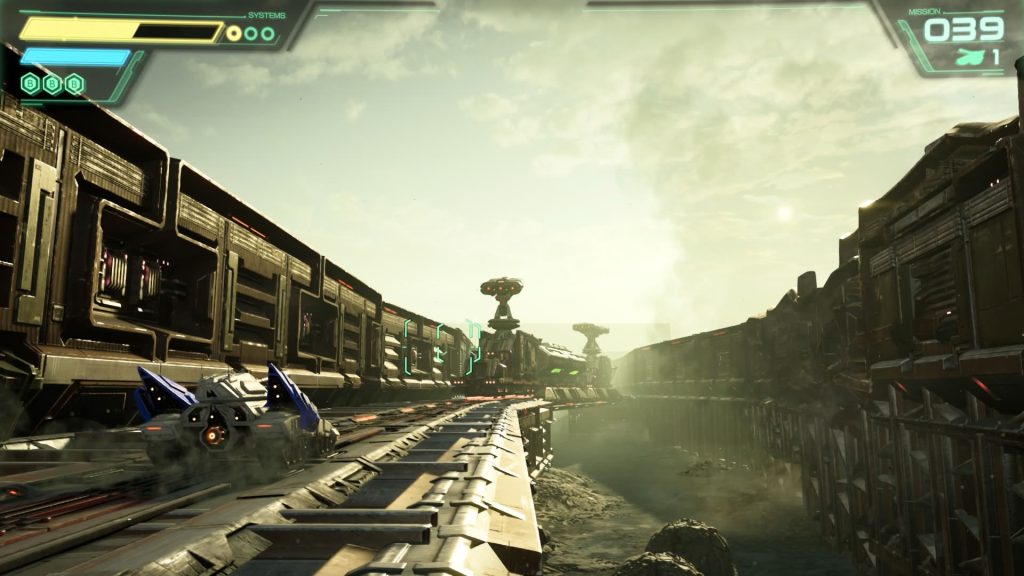
In the mission Macbeth, where Fox is driving the Landmaster Tank, there are multiple routes you can take through the level, from steering on the left or right sides to avoid seas of boulders coming at you, to driving on the railroad instead of dropping down and driving underneath it. That means each time you enter the level, you get a unique experience depending on your choice of routes, which makes replayability extremely rewarding. On top of that, you also have a choice of how to end the level; you can either face the boss in a somewhat laborious fight, or strike down a set of red switches which will instantly send the boss off to a better place, essentially avoiding the encounter.
This degree of choice also extends to progression in the campaign. Much like Star Fox 64, there are at least three routes you can take through the story, and each path offers unique missions, meaning you cannot experience everything in one playthrough, further encouraging replayability. The Venom II mission I described as being brutal earlier, for example, is totally optional due to this non-linear progression. Unlike Mario Tennis which came out earlier this year (and at a higher price no less), no part of this campaign is dull. Every environment impresses in both variety and fidelity, from Solar’s treacherous, rising lava waves to the numerable enemy blockades in Area 6.
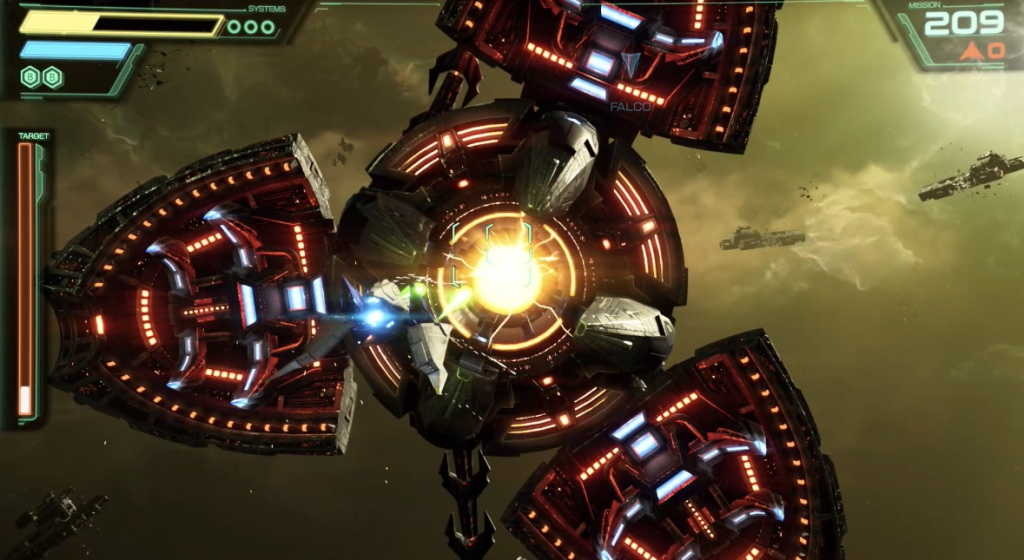
The Area 6 mission is a real showcase for the Nintendo Switch 2. With so many explosions, laser beams, and detailed enemy ships on screen at once, you could almost imagine a Switch Lite melting in your hands as it attempts to render the chaos being displayed. The character models are also super detailed; I was impressed by how developer Velan Studios handled the accessories and clothing, for example focusing on Fox’s Jacket, zooming in on his collar to show off individual creases formed based on how he moved his neck. The level of visual polish is incredible throughout, and while Donkey Kong Bananza is still my favourite game on the system, Star Fox is the best technical demonstration for the Switch 2 yet, with this fantastic presentation being presented at a crisp resolution and maintaining a steady 60FPS.
The online multiplayer mode is surprisingly strong. Unlike Smash Ultimate, which was where I put the most hours in online on the previous Switch, the latency and reliability of the PVP here is noticeably better. There are less frequent occurrences of rubber banding and ping spikes, and I never felt cheated when beaten by a player. Anytime I would do a somersault or barrel roll, the game registered it reliably enough to ensure I knew my deaths were a side effect of a skill issue, not of a netcode problem. This does bring me to a slight con about Star Fox, which is tricky because it is not really the game’s fault: it is a little difficult to find online matches.
As the Multiplayer can only be accessed by those with an active Online membership, and the Switch 2 is still in its early stages as a platform, there is a noticeable lack of people playing this mode. It often took me multiple attempts of matchmaking on a weekend before I was able to find a game, and when I did, half the lobby would be filled with bots to pad out the match, as only a couple of human players had joined. It’s hard to imagine this turning around, which is a crying shame because the multiplayer Battle Mode is super enjoyable. I loved the way they implemented the objectives, especially the cargo interception mode, which felt like Capture the Flag meets Top Gun.
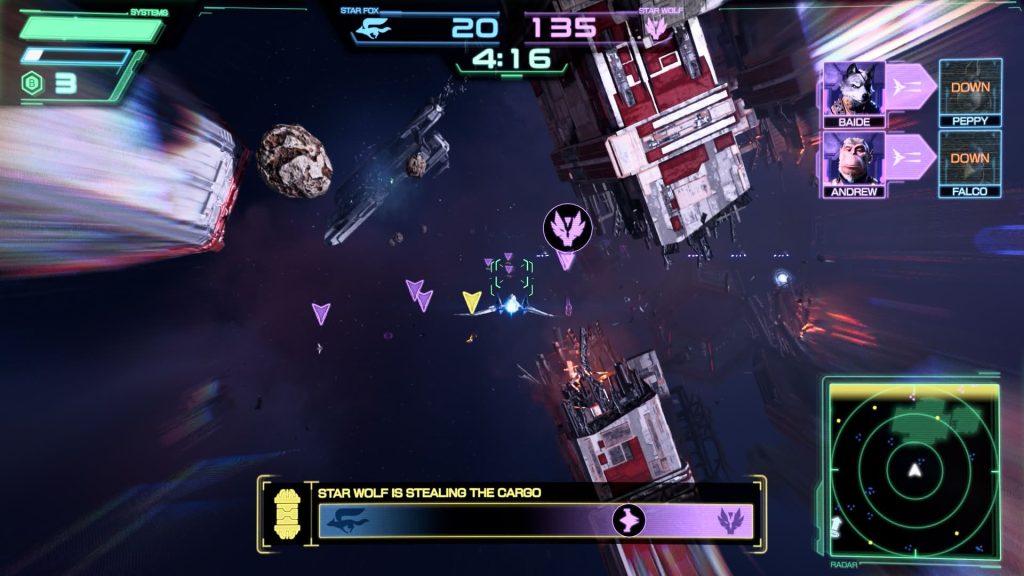
But for players not interested in playing for objectives, those can be turned off and then you have the equivalent of Team Deathmatch in an FPS. The responsive controls, intense dogfighting thrills, and excellent visuals from the campaign all carry over to the multiplayer, which makes it a fantastic addition to this remake. And, again, a phenomenal demonstration of how much better the Switch 2 appears to be at handling online multiplayer.
Fur and Blood
Much has been made of how the team has been reimagined in this remake. And while I am in agreement with original artist Takaya Imamura, in preferring the look of Fox McCloud in the Super Mario Galaxy Movie, I am also not opposed to how he and the rest of the team look here. As I mentioned earlier, the fidelity and detail in their character models is unbelievable, so while some of the realistic proportions of necks (or beaks in the case of Falco) might not work for everyone, I’m sure most players will get used to their design within a couple hours of playing the game. They fit in remarkably well within the remake’s world.
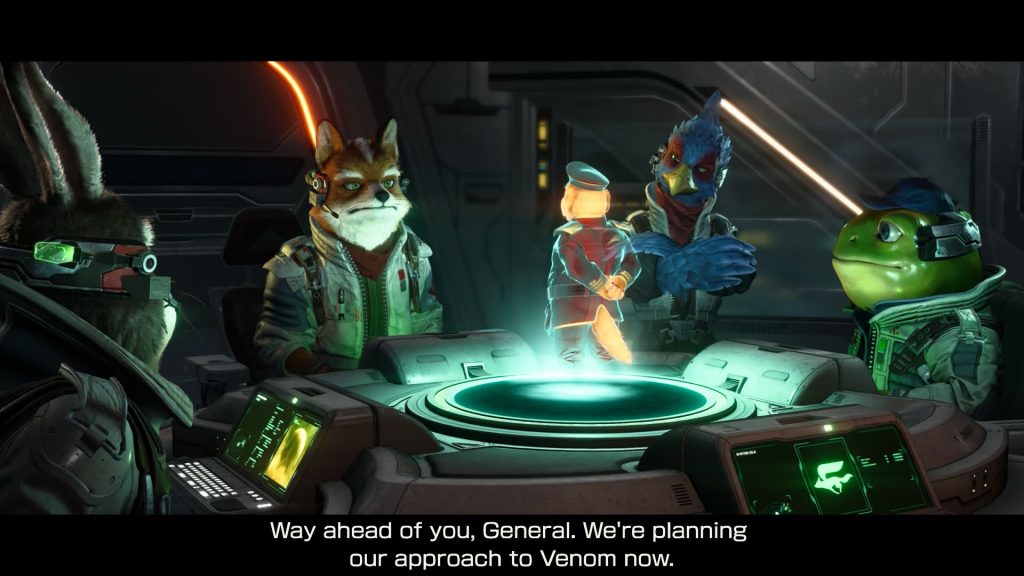
The voice acting is also solid, especially for Fox’s dad James McCloud, whose strong commanding presence makes the most of his limited scenes in the game. The cutscenes are well directed, with appropriate blocking and strong facial animations on the characters, particularly Fox and Peppy Hare who are both very emotive. The story is barebones but has effective elements, and does a fantastic job contrasting Fox with his father and depicting (subtly) his attempt to live up to his dad’s legacy, despite going down the different path of a merc for hire. This culminates in a beautiful, surprisingly emotional sequence, making the additional story cutscenes well worth the watch.
The other strength of the story is the rivalry between Fox and Falco, captured fantastically with quippy exchanges and Falco’s occasional, reluctant praise of McCloud’s skills. You can really feel the respect Falco has for Fox, although he is far too competitive to admit it. This is a tricky dynamic to convey in any narrative, yet the writers and voice actors manage to pull it off. Those with competitive co-workers or siblings will definitely get a kick out of this rivalry.
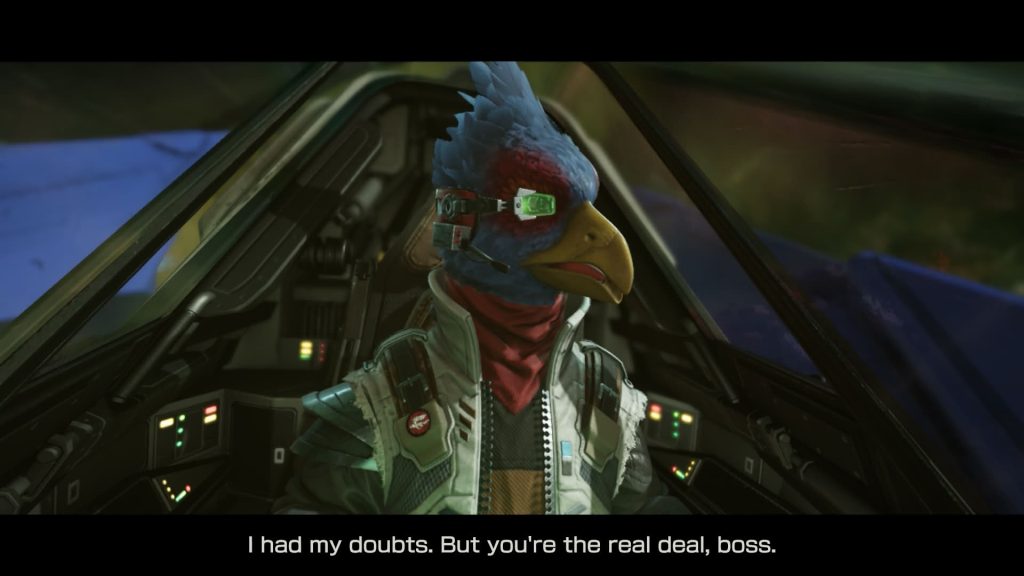
There is serious potential here to tell a more ambitious story with the strong facial animations, cutscene direction, and voice actors hired for this remake, and I would love to see a sequel that makes use of these strengths to deliver a more memorable narrative. That said, this one has some excellent moments, even getting out of its own way to deliver a lean, gameplay-driven experience – definitely the right call for a game reintroducing a decades-old property to a new audience.
Based on my experience, I can confirm this is a fantastic reintroduction of the Star Fox property. It retains all the strengths of the N64 release, but amps the production value to eleven. Not only is it a fantastic showpiece for what the Switch 2 can do technically, but the gameplay being as enjoyable as it is, in its largely unchanged state, proves this franchise can continue well into the future. Lets cross our paws and hope for a sequel that builds off this later in the generation.
Reviewed on Nintendo Switch 2 with a code provided by the publisher.
Star Fox makes a memorable return on the Nintendo Switch 2 with glossy visuals, adrenaline-pumping dogfights and a superb, highly replayable campaign.
