

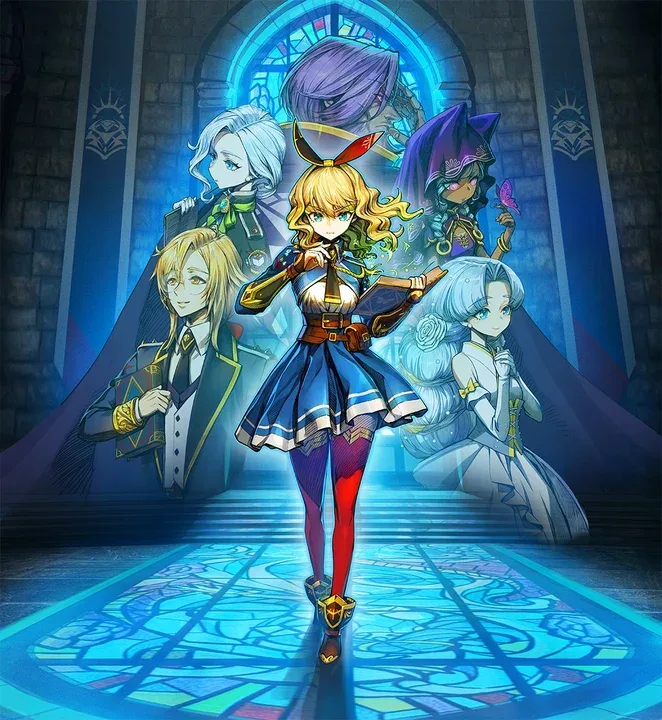
With the metroidvania trend showing no signs of slowing down, Japanese developer Hyde—whose eclectic portfolio includes everything from Disney Tsum Tsum Festival to horror-themed dungeon crawler Haunted Dungeons: Hyakki Castle—wanted a piece of the action. Enter Ariana and the Elder Codex, an action RPG / exploration platformer that has a few intriguing ideas but ultimately struggles to stand out from the crowd.
Ariana and the Elder Codex invites you to a fantasy world where magic is commonplace and humans live a life of comfort as a result—or at least, magic was common. The source of all this magic are the Seven Hero Codices, books that contain folkloric tales recounting the origins of the worldly elements that give magic its power. However, thanks to some nefarious person going through and altering the contents of those books, their power is lost.
The world’s only hope is Ariana (that’s you), a librarian with the unique ability to enter the codices, by way of a dreamlike rendition of the stories they contain, to repair the anomalies. With that setup, you’re tasked with travelling through a series of folkloric fantasy worlds, searching for rifts to repair, witnessing each story unfold along the way.
It’s an intriguing concept, taking what is a foundational piece of every culture—folklore—and making that the source of magic that the whole world relies on. Unfortunately, it’s an idea that doesn’t really get explored much, beyond giving you a reason to go hopping between different books. The fables themselves are interesting enough, but with little to tie them to the “real” world, one of Elder Codex’s more novel ideas misses the mark.
Ariana’s own story is a little more engaging, at least. A coming of age tale of sorts, Elder Codex deftly balances Ariana’s drive to save the world, her struggles with the burden of that responsibility, and some more personal motivations involving her missing parents. It’s nothing groundbreaking, but a well-written script, strong voice performances, and some loveable supporting characters give it both emotional weight and levity. The overarching mystery of who tampered with the codexes goes to some interesting places, too …
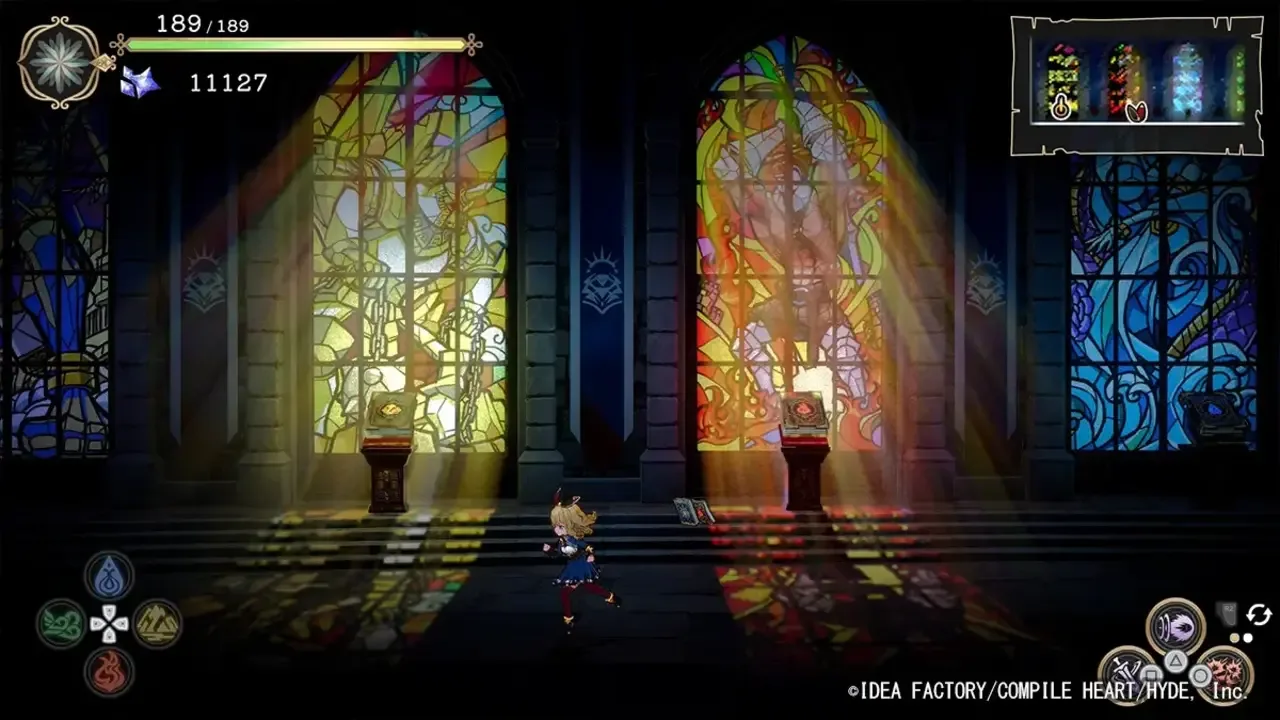
This sets the stage for an adventure that, at first blush, calls to mind Castlevania and the Portrait of Ruin—only we’re traversing books instead of paintings. And while each codex is a visual feast that sells the illusion of a literary, dreamlike world well—complete with a very nice shader that makes the 3D models look like old timey illustrations—it soon becomes apparent that Elder Codex isn’t nearly as ambitious with its exploration and level design as the games it invites comparison too. Maps are broadly linear, with some occasional branches and secret areas, but nothing even remotely as intricate as what’s become more or less standard through the genre’s never-ending indie boom.
This is an action RPG platformer first and a metroidvania second, which isn’t inherently a bad thing, but the light touch of the exploration elements creates an expectation that the game can never quite fill. Hidden areas are repetitive and dull: find a group of enemies off the beaten path, defeat them to open a rift in another part of the map, enter it to fight a few waves of enemies or complete a basic platforming challenge, and get a minor stat bonus for your effort. With none of the mystery or the labyrinthine interconnectedness that the best metroidvanias revel in, Ariana and the Elder Codex makes exploration feel bland and pointless.
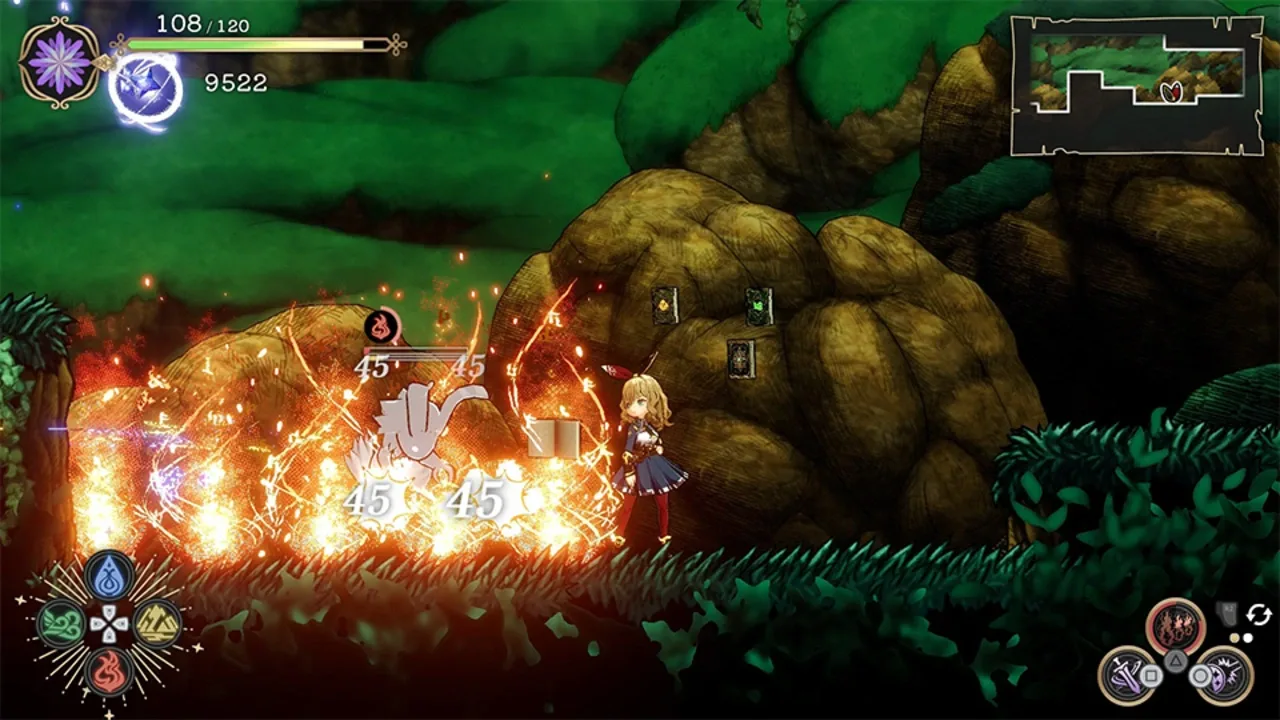
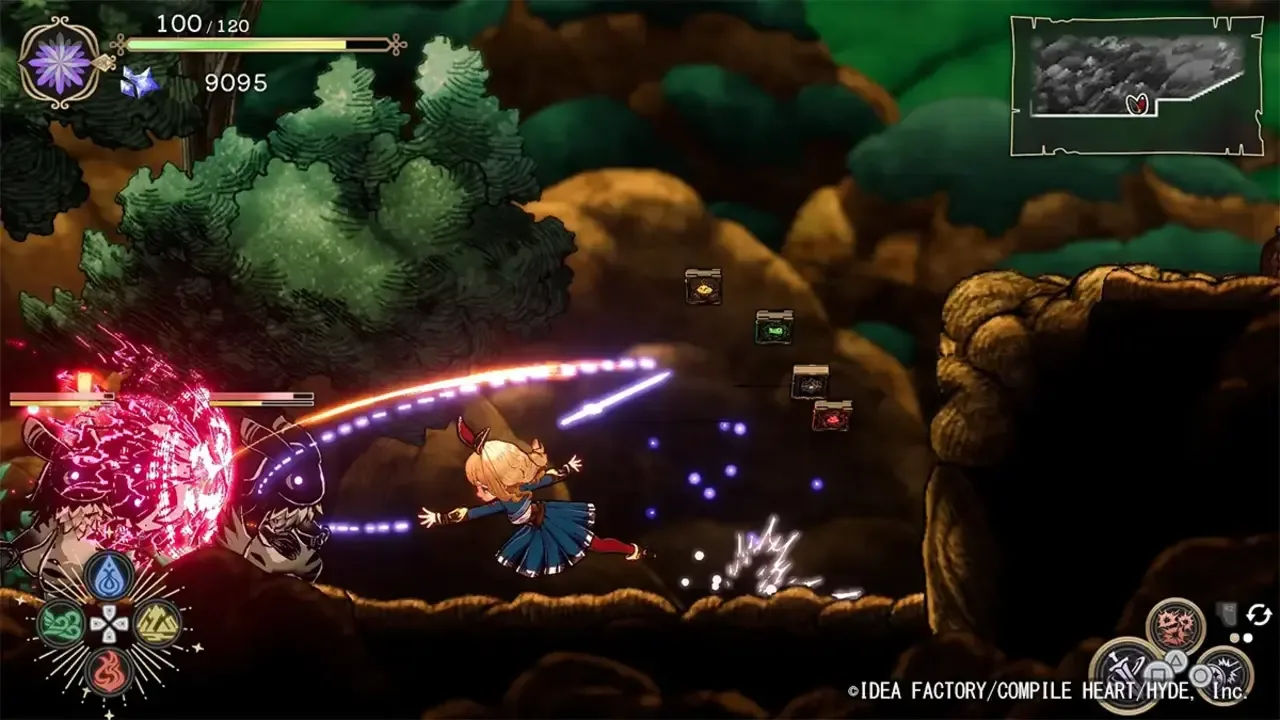
Combat is its more interesting side, with a decent assortment of spells for Ariana to learn and a simple but effective system of using elemental weaknesses to stun enemies, opening them up to big damage and potentially causing them to blow up and hurt any other foes nearby. The individual enemy designs are nothing to write home about, but the way groups mix and match different types of attacks is enough to keep you on your toes, especially on harder difficulties. You’ll rarely get to just blast away with your strongest spells, as overlapping enemy attacks keep you moving and force you to think about the different trajectories and crowd control effects at your disposal. It can get chaotic in a way that doesn’t seem entirely intentional, and isn’t always balanced—less “here’s a carefully curated enemy group”, more “chuck a lot of stuff at the wall and see what sticks”—but it works more often than it doesn’t.
Bosses, on the other hand, learn more towards the familiar, with a focus on pattern recognition and avoiding telegraphed attacks while you slowly chip away at their health bar. They’re well-designed encounters for the most part, though they do abandon a lot of what makes the game more unique, combat-wise, which is a shame (Elder Codex is oddly reminiscent of God of War: Sons of Sparta in that way).
What this all amounts to is a game that’s fine but unremarkable, despite some interesting (if undercooked) ideas. There are seeds of a fascinating world—both narratively and in terms of level design and exploration—and doesn’t do nearly as much with that foundation as it could. Combat is fun in the moments, but its best ideas fall to the side in the biggest moments. Ariana herself is a delightful character, but she seems destined for something bigger. Ariana and the Elder Codex is enjoyable enough for what it is, but missed opportunities hold it back from being something memorable.
Reviewed on PlayStation 5.
Review code provided by the publisher.
Despite some good ideas and a likeable cast, Ariana and the Elder Codex struggles to stand out in a very busy genre.
