
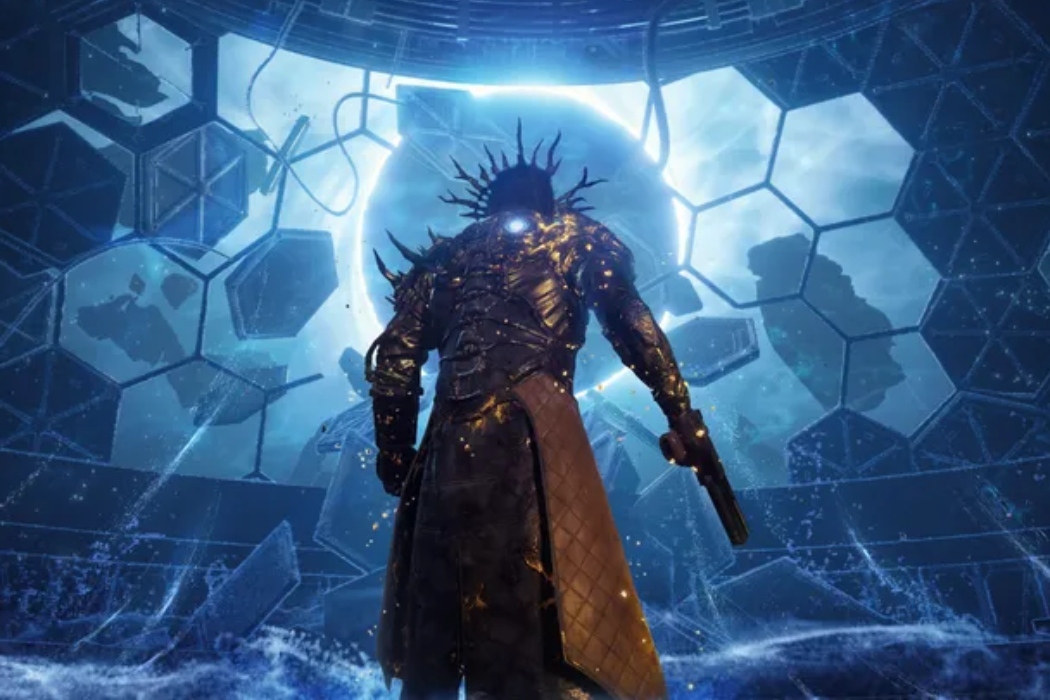
Saros has received a new, and free, update. With the update, Housemarque ‘had two main goals for the update: add replayability for existing players who had already plumbed the depth of Carcosa, and make the game more accessible so Saros even more people can discover the addictive, explosive, exhilarating bullet ballet gameplay that made Saros one of the highest rated action games of 2026.’
Including modes like New Game+, Overlord Rush and accessibility features such as Slow Game Speed and Auto-Fire, it hopes to find an even wider audience. And we here at Yeah Nah Gaming were lucky enough to get some time with Creative Director, Gregory Louden.
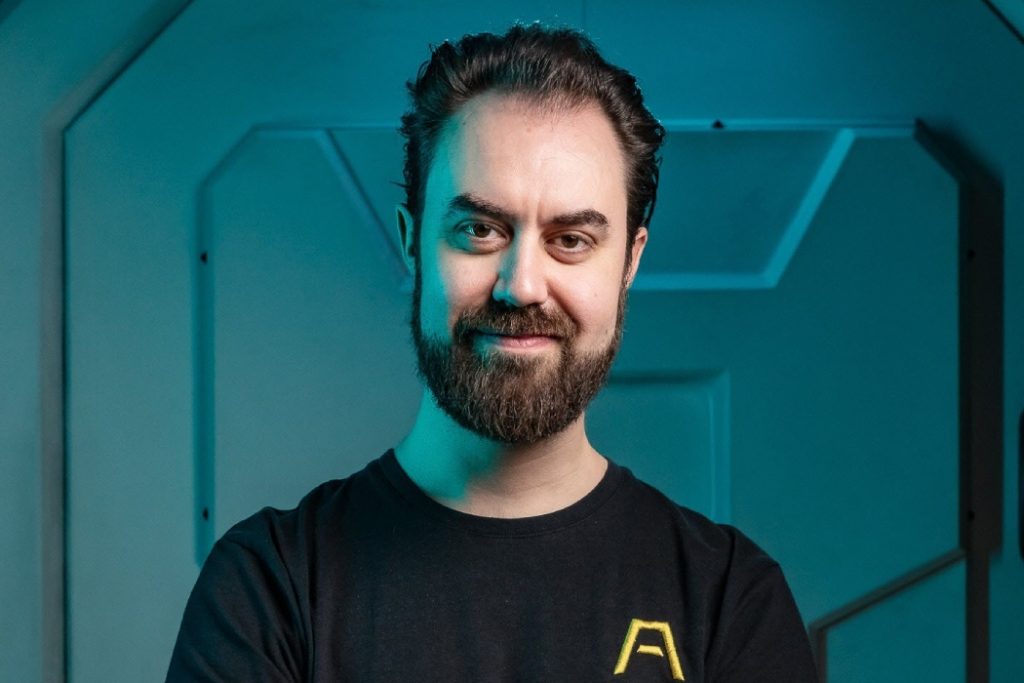
After thanking the team for their kind introduction, I ask:
I think a lot of gamers don’t recall what you’ve done as Housemarque. They think “Oh, who are these guys?” And when you explain your background to them, they think “They’ve done all of that!”. So thank you and congratulations so much for all of your work.
Oh, thank you! Yeah, No, I I feel the same. It’s been 31 years of Housemarque. It’s the oldest Finnish game studio and I’m really proud to be an Aussie. Kind of got to helm Saros with an amazing team. But yeah, I agree. It’s one of the best game companies and I’m thrilled to get to work there and I’m really proud of what we accomplished with Saros.
It’s so funny you talking about your time with Housemarque because I’ve had the privilege to talk with Jess Reiner Reid from Insomniac, and two of the Developers from Sucker Punch recently and all of you have really, really long backgrounds with all of your companies. With how the industry can feel quite volatile recently, maybe it’s healthier than we realise? What are your thoughts on that.
Yeah, I think with Housemarque, it’s just a really tenacious company. So when it was co-founded, I think they just they went through a lot of adversity. They were kind of there and there was no Finnish dev. scene. They were brave entrepreneurs. Don’t know if you’re familiar with the term ‘sisu’.
There’s been like a a movie series recently, but it’s this Finnish term, which means just constantly pushing and constantly driving towards adversity and overcoming it. So I think brave entrepreneurs making amazing games with great teams. I think that’s why Housemarque has done 31 years and I’ve been almost working there for 10 years now and it’s been a great place to be at.
It’s so funny you bring up ‘sisu’ as I have heard of the movie franchise. But I didn’t know it was something cultural!
It’s in the culture. It’s this kind of tenacity. Yeah. It’s a special kind of drive that they think of to overcome things. And I think that’s why they stuck around. They went through a lot of stuff and they delivered some special games that have kept them going and I think Saros is the the newest one.
So I’ll start off with a bit of a ice breaker even though we’ve already incidentally done that. My first question when it comes to Saros is how much did Housemarque know that the world needed more Raul Kohli and was the role of Devraj created around them or?
Great question. Rahul-wise, I think he’s a wonderful actor and I’d also say a wonderful person. So when we had the chance and opportunity for PlayStation to talk to him, and before we even offered him the role, he just wanted to say:
“Hey, before anything happens, I’m in. I love Returnal. I love Resogun. I want to do this game. What do you want to do?”
Rahul Kohli, Actor (Arjun Devraj in Saros)
And at that point, we were like “Wow, this is a really passionate person”. And the rest of the collaboration was completely the same. He wanted to play the game and do his cycles. He gave everything to this role. And now the game is out, I can talk about it more. I think the performance he did and the character arc and the study of Arjun is just phenomenal. And I think a little known fact is that he actually performed as the King as well. So when you see the King transform, that was Rahul fully acting everything like “OK, so my arms going to break. This is going to happen. That’s going to go”. And and then when he’s walking towards the throne with his hands, we ended up building the role together. It was true collaboration. So we kind of talked about it. And in the end, I think he made Arjun ‘Arjun’.
He brought so much depth and nuance. And I think some of my favourite lines in the game were actually Rahul just improvising.The moment when he kills the King and says “I’m the King”, that was him. It’s makes so much sense. But he just improvised it.
And there was this, I remember the first take in the hotel sequence where he looks at the mirror and he punches it. It was so visceral that it was just like, it’s done. We’re not going to do better than that. We’ll just accept it. He wanted every line of voice over to be equal to the quality of the performance capture. So to work with him as a collaborator and storyteller, and he even played the game and he was like “Greg, I think the balance of this is off”. He was usually right. And I was like “Yeah, I agree”.
“I think the world needs more of them. And he’s a great collaborator.”
Gregory Louden, Creative Director (Housemarque)
I really love that you pointed out that he improvised that line “I am the King” and the moment in the motel. Because they reflect how disconnected Arjun became between those two instances of the narrative.
When he was exploring the Yellow Shore, he felt like he had control. But then when you had to confront his obsession, we then had to lose it. And I really like that kind of contrast between it and it’s so, so, so exciting to me to hear that’s something which Rahul brought on himself with the character and understanding what Arjun’s journey was.
With that in mind, both Returnal and Saros feel like games that were dealing with different emotional spectrums. You had Selene battling with grief in Returnal, while in Saros Arjun dealt with obsession.
What were the choices behind these narrative hooks?
In a lot of ways for us, we wanted to create a story with as many interpretations. We wanted to create something that’s mysterious and haunting. But in the end I think both of them are character studies. And the idea was to explore deeply human and universal themes like the ideas of self-interest. Obsession. Selfishness. Greed and obviously trauma and grief.
And I think to me, and maybe this goes back to this idea of it being built on a rogue-like form, that these are games about cycles and overcoming challenge. Even the tagline of Saros is ‘come back stronger’. It’s not just about gameplay.
It’s about Arjun as an individual. How he needs to rebuild himself and find a new future. So I think in a lot of ways it was about wanting to create really powerful universal stories that help push the medium of games. You don’t usually play games that explore these themes. So I think when we set out to create Returnal and Saros, we wanted to help push the medium and show what games can explore. It doesn’t have to be the same type of stories. It can be, as you said, obsession. And I’m so glad you could zoom into the idea of that. And I think that is the thing. It’s sort of Arjun’s odyssey of obsession and how he can overcome it.
I like that you use the term haunting because they they sit with you and they want you to observe the story. For me, especially Returnal, when I first experienced the initial ending from that game, I just sat there for a second.
I thought “All of that journey meant nothing”. But with the second ending, that sense of accomplishment to see the true themes of the game is really rewarding. And that ending is something that takes place at a different time to the game.
So I’d like to bring that up as it ties into how I feel Housemarque treats time. Time in these games feels like an unreliable narrator because in Returnal, while it might be a straight line. It also loops back on itself.
Whereas in Saros time is running away from Arjun at a rapid rate which he can’t keep up with. Then he also possibly goes back in time. Is this something that Housemarque stumbled onto or is it something that you guys wanted to do with both games from the get go?
Definitely. I think time has been the bigger thing. And this idea of sort of, to me, a great story is where a person revisits their footsteps in order to find out how to become someone else. It’s a story of change. So time is usually the way that you can have change. And I think even the name Saros was intentional. It’s related to time. Its true meaning. So I think in a lot of ways it is about these characters going through these journeys. And the same way that the player invests time into playing as them, then it’s something that I like to think with Returnal that Selene’s always there. And if you want to go back, you can. But by you playing the game, you’re progressing her forwards and you’re leaving her in a different place.
So yeah, it’s been a deeper thought process of the games. And I’m glad that you could hone in on it. And I think once again, we always want the our players to have multiple interpretations. But I would say there is always a universal truth. And that’s something that I’ve agreed with both Jane Perry, who played Selene, and with Rahul, who played Arjun, that we know the story and we don’t actively talk about the true meaning. We leave it to the audience and our players that are smart and sophisticated to piece the story together and have that sense of reward from the games.
I 100% agree with that. With media illiteracy running away from us as quickly as it is, it makes games like Returnal and Saros really stand out for me. Both of them have made me feel like they don’t want to be interpreted. They just want to leave you with what you think the interpretation of the game is.
And I really like that, because normally a lot of people feel they need the sense of closure from that. But I like the openended nature. And I think that’s what time does for those games because time is this unreliable constant. It’s says “the story can be whatever it wants to be because it’s always happening”. It’s always cycling. So I really like that you guys use that, especially in the terms of a of a rogue-like. Which brings us to Zenith.
Of course, Zenith adds amazing new features to an already great game. Is this feedback from players themselves or is this stuff you thought “Hey, what if we just added this to the game because we could?”
I’d say Zenith was really fun that the team. We had a bunch of ideas after we shipped Saros and we wanted to release as soon as we could for players, which is why it was important to bring it out this year.
And one of the immediate concepts the team had was this idea of boss rush. We called it Overlord Rush for us, and it’s super fun and it’s super fast. And that was kind of a team wishlist thing. And the fun thing was the community said “Hey, Boss Rush would be cool” and we didn’t want to repeat ourselves from Returnal, we wanted to do something new. So that was a big thing that the community wanted it.
And we wanted to do even more. We wanted to deepen the story of Carcosa. So with Eclipse Layers, you customise the challenge using more modifiers, plus the ones you had before. So we’ve deepened that system. But then there’s, what we call, the ‘Footsteps of the King’ where there’s even more story. You find visions in stones placed throughout the world of Carcosa. And as you cycle, you’ll find even more meaning about the Yellow Shore, Carcosa, and the Blue Precipice.
Once again, as storytellers, we wanted to deepen the world-building and mythos of Saros. Lastly, we wanted to add even more accessibility. We’ve been inspired by other PlayStation studios. We wanted to add visual contrast because that’s something other PlayStation games have added and we wanted to provide for that community. Then we added some stuff which I think is super cool. There’s a really passionate core at Housemarque which loves motion sensor and I think our implementation for the motion sensor stuff is why it’s super sophisticated. I’ve been sitting next to our lead designer and watching him do Overload Rush with motion sensor and he is ultra-precise with the power weapons. So it’s cool stuff. It’s a combination of our internal vision plus some validation from players wanting have some of these things as well.
“But I think the key thing was we didn’t want to repeat ourselves and we wanted to create something distinctly Saros. But we also felt like we needed a new chapter for Housemarque. A new experience that we can create as a team.”
Gregory Louden, Creative Director (Housemarque)
Well, I love that.
Let’s wrap up with this final question then, which will be a bit more of a fun one. Does Housemarque feel very proud about increasing sales for the King In Yellow novel?
I think in general, I just say feel super-proud of Saros. I think we and the team, like I think our whole team levelled up and we had so many amazing collaborators that worked with us.
And I think in the year 2026, I think Saros is one of the most unique and most creative games that came out, and I’m really proud to have been a part of it. And shout out to the King. Like, it is nice to go to bookstores and see the King in Yellow hanging out. And it inspired us and I hope it inspires others. It’s a wonderful story. And when we went from Returnal and knew we wanted to explore cosmic horror again, we went “Well, where’s deeper than literally the thing that inspired Lovecraft?”. And that’s Robert W. Chambers. And what is a bigger, more cosmic event than literally two celestial bodies crossing each other with an eclipse?
“So it’s nice to see. If more people love that story, then I think it’s a more exciting place to be.”
Gregory Louden, Creative Director (Housemarque)
A massive thank you to our friends at PlayStation NZ for the opportunity, and Gregory Louden for their time. You can download the Zenith add-on right now for Saros, exclusively on PlayStation 5.
